Heat vs. Celtics: Five things to watch

Decrease fontDecrease font
Enlarge fontEnlarge font

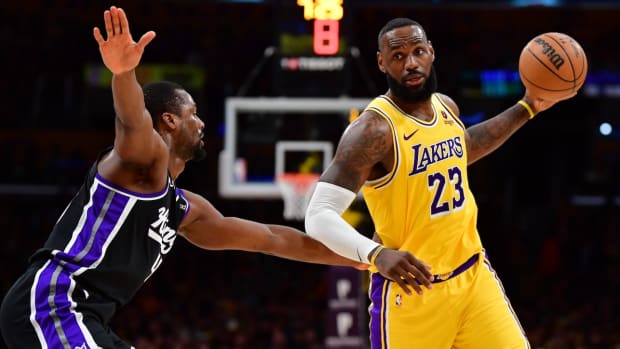
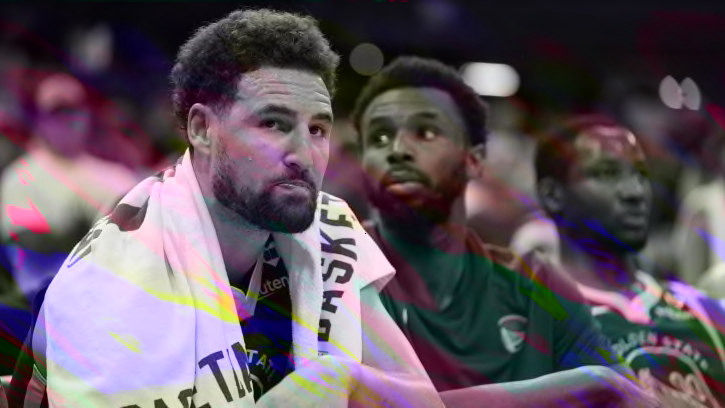
LeBron and the Heat have gone 34-10 since their second loss to the Celtics. (Jim Rogash/Getty Images)

I know everyone is buying snacks in preparation for the Toilet Bowl on Sunday (6 p.m. ET), but there are a couple of other semi-important games before then. The headliner (at 1 p.m.): The third matchup between Boston and Miami, and the first since Nov. 11, when the Celtics defeated the Heat for the second time in a two-week span.

That Boston victory set off a wave of gleeful grave-stomping and shrieking panic that we’ve seldom seen attached to any regular-season game, let alone a November matchup that was almost meaningless in the big picture. LeBron James was branded unclutch, Dwyane Wade a useless second wheel and Chris Bosh a passive Rajon Rondo posterization victim. Glen Davis screamed about how good it felt to “spank that a#*,” and Paul Pierce tweeted that he enjoyed “taking [his] talents” to Miami.

Since that night, the Heat have gone 34-10 and passed Boston in the Eastern Conference standings. They’ve added Mike Miller to their rotation, benched and un-benched Eddie House, switched starting point guards and re-jiggered their center rotation several times. A victory Sunday in Boston would be perhaps Miami’s biggest of the season, and it would be an important step in the race for home-court advantage in the Eastern Conference.

Here are a handful of things I’ll be watching for Sunday afternoon:

1. Who guards Rajon Rondo, and how does Boston respond?

For all of Rondo’s growth and Boston’s proficiency on offense, we saw on Thursday against the Lakers that the Celtics can still bog down against teams that have a bigger wing player defend the point guard by playing several feet off him and daring him to shoot long jumpers. At times, that sort of defense can stymie Rondo’s penetration and Boston’s pick-and-roll attack, and throw off the entire offense.

We already know the Heat will do this, possibly with Wade and James each getting some turns on Rondo. If it’s James, that will leave either Wade or Miller guarding Pierce — matchups Boston would likely try to exploit. If Miami goes this route with Mario Chalmers or Eddie House on the court, one of those two little guys will have to guard Ray Allen.

Rondo and coach Doc Rivers have a lot of experience dealing with this in various ways, and Rondo has piled up 33 assists in two games against the Heat this season.

2. What happens when Miami goes big?

This is a related question. As Miller has gotten his legs back, Miami is giving more minutes to various combinations that include three wing players and no traditional point guard. In crunch time, those lineups will include James, Wade, Bosh, Miller and either Joel Anthony, Zydrunas Ilgauskas or (rarely) Erick Dampier.

Those lineups present a bunch of questions for each side. The most important one for the Celtics (as it is for every team) involves how it affects their point guard. Rondo is going to have to defend a bigger player when Miami goes to this group. Don’t be surprised if it’s Miller, because Rondo obviously can’t guard James and the Heat often look to post up Wade against point guards.

And on the other end, either James or Wade will have to guard Rondo full time.

3. What happens when the Heat go small?

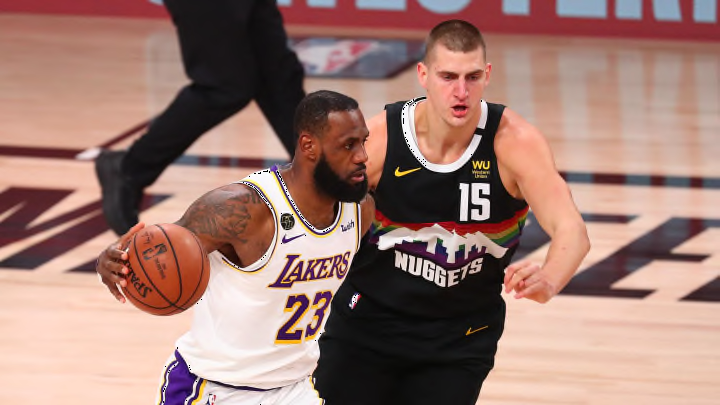
The whole LeBron-as-power-forward thing is no longer a novelty. The Heat are using him as the power forward on a regular basis now, usually at the end of the first and third quarters, when LeBron plays alongside at least three bench players as Wade and Bosh rest. There are two ways to respond to this: Go small along with Miami, or stick with your normal lineup — with two “traditional” big men — and see what happens.
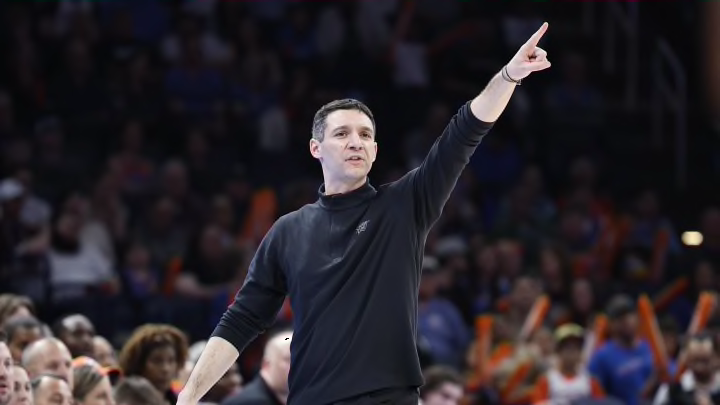
The Pacers took the latter approach and stayed with two big men last week against Miami. But they wanted their small forward, Danny Granger, to stick with LeBron, and that created a bizarre situation in which one of Indiana’s big men had to guard James Jones. Jones isn’t a dynamic threat, but he’s much quicker than Tyler Hansbrough, and that quickness allowed him to dart around the perimeter for open looks before Hansbrough could get out on him.
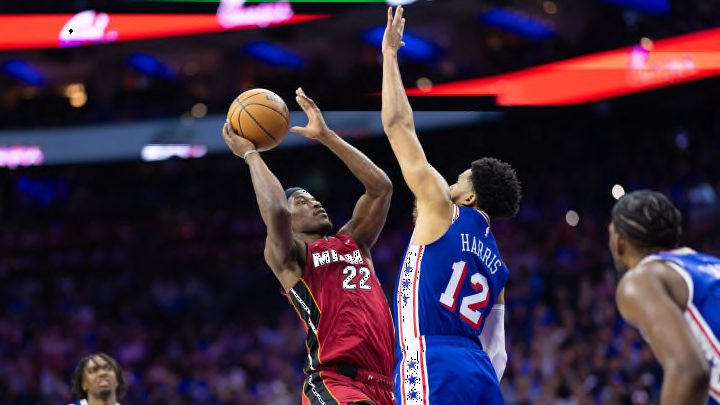
Given Boston’s front-line health issues, it would seem much more likely that it’ll opt to go small and shift Pierce to power forward along with James. Those same health issues also likely mean more key minutes for Von Wafer.

4. Bosh has a chance to prove himself

If there was one player who left those two Boston-Miami games with a damaged reputation, it was Bosh. He scored just 23 points combined and attempted only six free throws. He grabbed 15 total rebounds, settled for too many jumpers and generally didn’t look up to the task of battling Boston’s maniac power forward, Kevin Garnett.

Bosh has grown much more comfortable since then. He might be Miami’s most important defender (perhaps second only to James) because of his ability to jump out on pick-and-roll ball-handlers and get back to a big man quickly. He has also settled into a larger role in Miami’s offense and upped his free-throw attempts to about six per game.

This is a chance for Bosh to prove he’s ready for the hothouse of the playoffs.

5. Can Miami stop the guy who shoots all those threes?

Boston shot 17-of-32 combined from three-point range in those two wins against the Heat. Allen, by himself, hit 12 of his 17 triples. That’s crazy stuff. Maybe Allen was just on fire. Maybe Wade was still dealing with the lingering effects of his preseason hamstring injury.

The Heat have been the stingiest team defending against three-pointers for most of this season, so they know how to rotate and close out. If they can limit Allen on Sunday, that will be one big step toward a revenge victory.

  • Published On 10:34am, Feb 12, 2011